Construction Portfolio Management Software: How Developers Manage Multiple Projects in One Place
Manage multiple construction projects in one place with portfolio-wide visibility into costs, schedules, funding, risks, and contractor performance.
 Sneha Kumari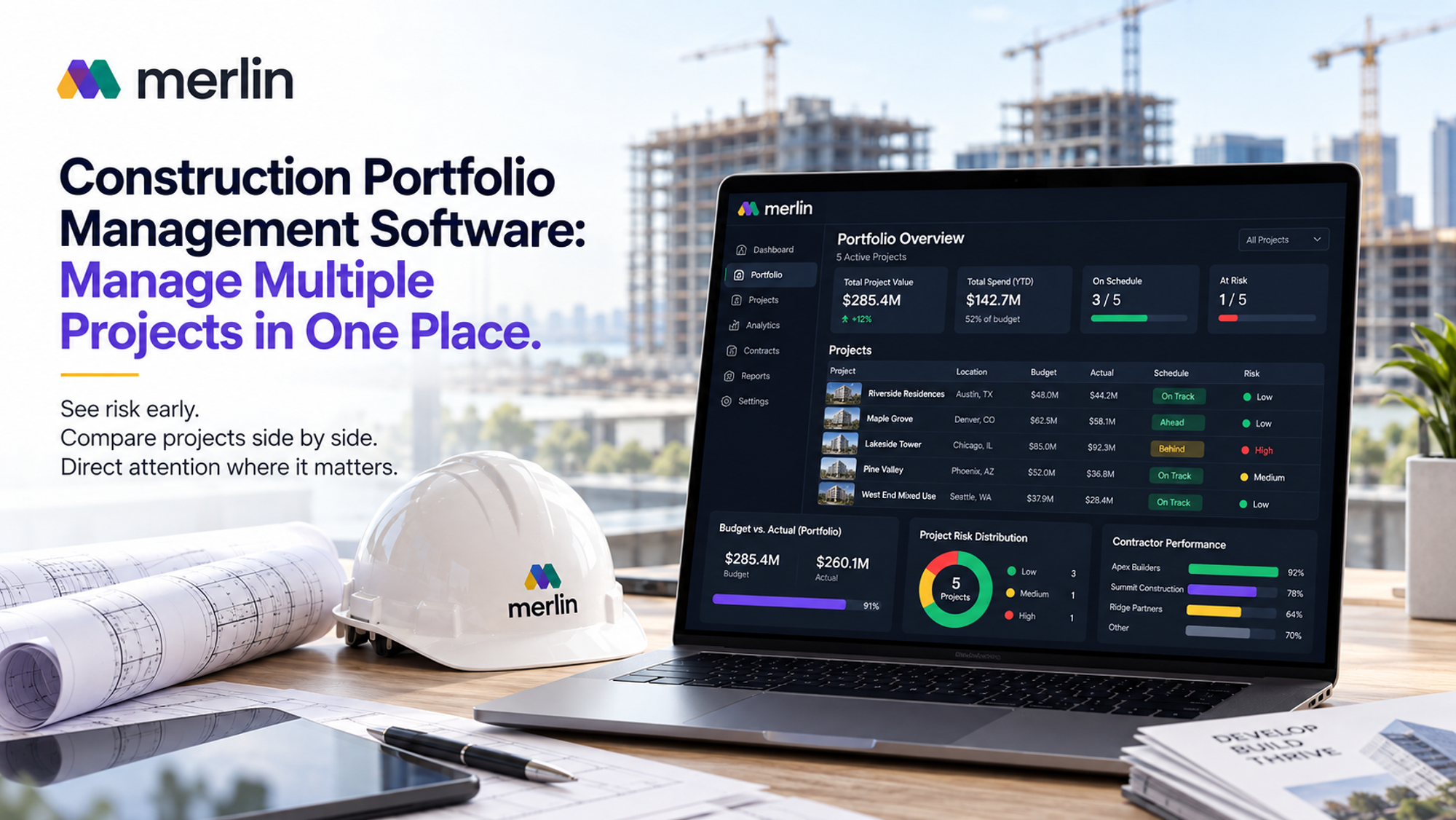
Developers running more than a few active sites eventually hit the same wall: project files that work perfectly well for one job stop being useful once there are five, ten, or twenty of them running in parallel. Spreadsheets multiply, reporting takes days to assemble, and comparing performance across projects turns into guesswork. Construction portfolio management software solves this by giving developers one connected view of cost, schedule, funding, and contractor performance across every active project, instead of a separate silo for each one.
This guide covers what construction portfolio management software actually is, why project owners and large scale developers eventually need it, and how it handles the harder parts of running a pipeline: multi source funding, governance, and financial control. It also looks at how portfolio level data makes it possible to compare projects and contractors fairly, how developers use it to standardize delivery across repeat builds, and the features worth prioritizing when evaluating a platform like Merlin's construction platform.
What Is Construction Portfolio Management Software
Construction portfolio management software is a system that lets developers and project owners track cost, schedule, risk, and performance across every active project from a single dashboard, rather than opening a separate file or tool for each site. Where standard project management software is built around one job at a time, a portfolio layer sits above individual projects and rolls their data up into one connected view, so a leadership team can see the whole pipeline instead of stitching together spreadsheets from each project manager.
For a developer running five ground up builds, three renovations, and two modular projects at once, this distinction matters. Construction project portfolio management is not simply project management repeated ten times over. It answers a different set of questions: which projects are ahead of schedule and which are draining cash, which contractors are consistently late across sites, and where capital should move next quarter. A true construction project management software platform built with portfolio visibility in mind treats every project as a data source feeding one shared operating picture, not an isolated record.
In practice, this usually shows up as a single dashboard view: a list of every active project with its current schedule status, budget position, and any flagged risk, alongside filters to drill into cost, contractor, or funding source across the whole set. The goal is not to replace the detail available inside each project, but to make that detail visible at a glance across all of them, so a portfolio manager is not logging into ten different files to answer one question.
Why Project Owners and Large Scale Developers Need Portfolio Level Management
Project owners and large scale developers need portfolio level management because single project tools cannot show how risk, cash, and resources move across a pipeline, only within one job. Once a developer is running more than a handful of active sites, decisions stop being about one project and start being about tradeoffs between projects, and that requires a different lens.
This shift usually happens quietly. A developer adds a second, then a third project, still tracking each one in its own spreadsheet or standalone tool, until a lender asks for consolidated exposure across the portfolio or a board meeting needs one answer on total capital at risk. At that point, project by project tracking stops being a workflow choice and starts being a real constraint.
A few reasons this becomes unavoidable at scale:
- Capital is finite and shared: every draw request, change order, and delay on one project changes what is available for another, so owners need to see funding exposure across the entire portfolio, not project by project.
- Risk compounds: a permitting delay on one site, a material shortage affecting three sites, or a general contractor stretched thin across multiple jobs can increase construction project delivery risk across the entire portfolio.
- Reporting obligations multiply: lenders, investors, joint venture partners, and boards expect consolidated reporting that a stack of individual project files simply cannot produce on demand.
- Teams get spread thin: the same estimating, procurement, and project management staff often support several developments at once, and without shared visibility, it is easy for one project to quietly absorb more attention than its share.
This is the core case for multi project construction management software: it exists because growth turns managing one project well into managing a whole portfolio well, and those are genuinely different jobs.
Managing Portfolio Visibility, Multi Source Funding, Governance, and Financial Control
Managing a construction portfolio well means being able to see, fund, govern, and financially control every project from one system rather than reconciling separate records after the fact. Four capabilities tend to matter most.
Portfolio visibility: a developer needs to track progress across multiple projects, including schedule status, budget position, and open risks, without waiting for a weekly report. Portfolio dashboards pull this from each project's underlying data automatically, so status updates reflect what is actually happening on site rather than what was true when someone last built a spreadsheet.
Multi source funding: large developments rarely run on one pool of capital. Equity, construction loans, mezzanine debt, and joint venture contributions often fund different phases or even different line items within the same project. Construction portfolio tracking needs to reflect which dollars came from which source, what draw conditions apply, and how spend against each source compares to plan, so finance teams are not reconstructing this by hand before every lender call.
Governance: as portfolios grow, so does the number of people who can approve a change order, release a payment, or commit to a schedule change. Clear approval workflows, audit trails, and role based permissions keep decision rights aligned with who actually owns the risk, and they matter just as much for compliance as for day to day operations.
Financial control: none of the above works without accurate, current financials. Consolidated budget versus actual reporting across the whole portfolio, automated variance flags, and financial forecasting for construction firms turn scattered project ledgers into one financial picture a CFO can actually act on.
Comparing Project, Cost, and Contractor Performance Across Developments
Comparing performance across developments means looking at the same metrics, measured the same way, on every project, so differences reflect real performance rather than inconsistent tracking. This is one of the clearest advantages portfolio software has over a folder of individual project files.
On the project side, this usually means comparing schedule adherence: how many projects are on track, how many days behind is each one running, and which phases tend to slip most often across the portfolio. Patterns that stay invisible at the single project level, like every site losing time during the same permitting stage, become obvious once projects sit side by side.
On the cost side, portfolio software makes it possible to compare budget accuracy, change order volume, and cost per unit or per square foot across similar project types. A developer building several multifamily properties can see which site is running efficiently and which one has quietly drifted from its original estimate, and where there is room to improve profit margins without waiting for month end close.
Contractor and subcontractor performance is where this comparison earns its keep. Instead of judging a general contractor's performance on one job in isolation, a developer can look across every project that contractor has touched:
- On time completion rate across all assigned projects
- Change order frequency and average change order value
- Rework or quality issue rates
- Responsiveness to RFIs and submittals
- Safety incidents, where applicable
These performance records support stronger subcontractor management for developers, helping teams identify coordination gaps and decide which trades need closer oversight.
None of this needs a formal comparison table to be useful. A short performance summary per contractor, built from portfolio wide data, tells a development team who to bring back for the next project and who needs closer oversight, which is exactly the kind of decision portfolio level data is meant to support.
Standardizing Delivery Across Repeat Construction Projects
Repeatable project delivery means capturing what worked on one project and applying it to the next, instead of relearning the same lessons every time a new development breaks ground. . Developers who repeat similar project types, such as multifamily buildings, modular housing, or retail buildouts, gain the most from this because their projects share enough structure to make templates genuinely reusable.
A few areas where standardization pays off fastest:
- Budget templates: starting each new project from a proven cost structure, adjusted for site specific variables, rather than building every estimate from scratch.
- Schedule templates: reusing a phase sequence and durations that reflect actual historical performance instead of optimistic planning assumptions.
- Vendor and contractor lists: carrying forward the subcontractors and suppliers who performed well on past projects, informed by the same portfolio wide performance data covered above.
- Reporting formats: using the same investor and lender reporting structure across every project so stakeholders are not relearning a new format each time.
- Punch list and quality checklists: standardizing what gets inspected and when, so quality control does not depend on which project manager happens to be running that site.
This is also where the return on portfolio software compounds. Each completed project adds to a growing base of real cost, schedule, and contractor data, which makes every template a little sharper for the next build. Over time, a developer running repeat projects is not just managing a portfolio, they are building an internal playbook that new projects inherit on day one.
This is particularly true for developers working with modular or offsite construction, where repeatability is already part of the build method. A production schedule template built from one modular project transfers almost directly to the next, and portfolio software is what keeps that template connected to real cost and performance data instead of living in a static document that never gets updated.
Essential Features to Look for in Construction Portfolio Management Software
The right construction portfolio management software should give a developer one operating picture without forcing the team to change how they work on individual projects. A few features matter more than the rest when evaluating options.
- A true portfolio dashboard: one screen showing every active project's schedule status, budget position, and flagged risks, not a series of links out to separate project files.
- Multi entity and multi source financial support: the ability to track funding by source, entity, or joint venture structure, and roll it up into consolidated reporting without manual reconciliation.
- Contractor and vendor performance tracking: historical, portfolio wide data on every contractor and supplier a developer has worked with, not just notes buried in one project's files.
- Budget versus actual reporting with variance alerts: automatic flags when a project drifts from plan, so problems surface before they show up in a month end report.
- Templated workflows for repeat project types: built in support for reusing budgets, schedules, and checklists across similar developments.
- Investor and lender ready reporting: consolidated reports that can go directly to stakeholders without a manual rebuild every reporting cycle.
- Field to office connectivity: mobile access so site level updates feed the portfolio view in real time, rather than arriving days later.
- Integration with existing tools: compatibility with accounting, estimating, and scheduling systems already in use, so adopting a portfolio layer does not mean replacing everything else.
Not every developer needs every feature on this list on day one. A firm running three projects might only need a shared dashboard and consolidated financial reporting, while one running twenty benefits from the full set, including templated workflows and contractor performance tracking. The right starting point depends on where the pipeline is growing fastest.
Reviewing construction ERP modules against this list is a useful way to separate genuine portfolio functionality from single project tools that simply added a multi project label. The difference shows up quickly once you ask whether the software can answer a portfolio level question, such as total capital exposure across every active project, without exporting data into a spreadsheet first.
Developers evaluating portfolio management software are usually best served by starting with the projects already underway: pull real budget, schedule, and contractor data into one system before adding new complexity on top.
Frequently Asked Questions
What is the difference between project management and portfolio management in construction?
Project management focuses on delivering one job on time and on budget. Portfolio management sits above that, tracking cost, schedule, risk, and contractor performance across every active project at once, so owners can compare developments and allocate capital and attention across the whole pipeline rather than one job at a time.
How does construction portfolio management software handle multi source funding?
It tracks spend against each funding source, whether equity, construction loans, or joint venture capital, and rolls that data into consolidated reporting. This lets finance teams see draw conditions and remaining exposure by source without manually reconciling separate ledgers before every lender or investor update.
Is construction portfolio management software only useful for large developers?
It becomes most valuable once a developer or owner is juggling more than a handful of active projects, since that is when tracking everything through separate spreadsheets starts to break down. Smaller developers running two or three projects can often manage well with standard project tools until their pipeline grows.
How does portfolio software compare contractor performance across different projects?
It aggregates data such as on time completion rate, change order frequency, and RFI response time for each contractor across every project they have worked on, rather than judging performance from a single job. This turns scattered project notes into a reusable performance record a developer can check before awarding the next contract.
What kind of return can developers expect from adopting portfolio level software?
Most of the return comes from catching cost and schedule problems earlier, reducing time spent building manual reports for lenders and investors, and reusing proven templates across repeat projects. The exact payoff depends on portfolio size, but the earlier a developer moves from spreadsheets to a connected system, the sooner these savings start compounding.