Metal, MEP, and Structural: How Specialist Fabricators Get Earlier Visibility Into Construction Projects
Learn how metal, MEP, and structural fabricators gain earlier visibility into construction projects, connect with buyers, and secure better opportunities.
 Sneha Kumari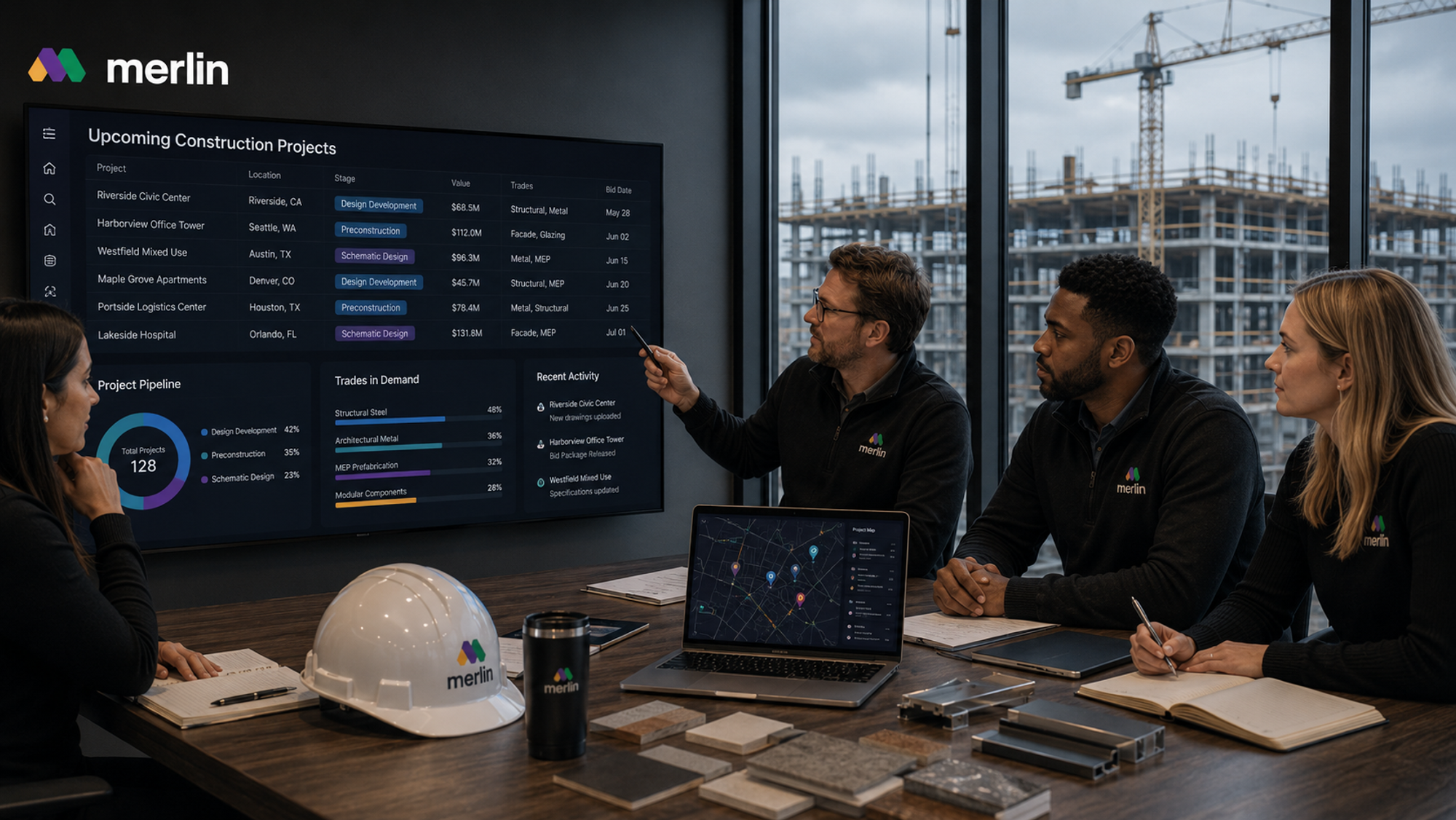
A metal fabrication shop, an architectural facade manufacturer, and an offsite modular factory all run into the same problem from different angles: by the time a construction project actually reaches them, most of the real decisions have already been made. The design is finalized, the bid list is set, and the fabricator is one name among several competing mostly on price.
This piece looks at what changes when specialist fabricators and offsite manufacturers get visibility into construction projects earlier, while a project is still being planned rather than once it is ready to bid. That includes how metal fabricators can discover opportunities earlier, how architectural fabricators connect directly with the construction buyers making vendor decisions, and how offsite manufacturers connect with project procurement teams early enough to matter for their own production timelines. Platforms like MerlinAI, built around matching fabricator and manufacturer capabilities to real project needs, are what make that earlier connection possible at scale.
How Metal Fabricators Discover Construction Opportunities Earlier
For most metal fabricators, structural steel shops, ornamental metal shops, and similar operations, a construction project shows up on the radar the same way every time: a general contractor or a subcontractor sends over a bid package once the design is locked and a shortlist has already been drawn up. By that point, the project has been through months of construction planning, and the fabricator is one of several names competing on price and lead time alone.
Earlier visibility changes that order of events. Instead of waiting for a bid invitation, a fabricator with visibility into construction projects earlier in their planning stage can see which upcoming jobs call for their specific capabilities, whether that is architectural metal panels, structural steel connections, or custom fabricated assemblies, while the design is still being finalized.
That timing matters for two reasons. First, a fabricator who is visible earlier has a chance to offer input on constructability before drawings are frozen, which is a much stronger position than bidding against a spec someone else wrote. Second, earlier visibility gives the fabricator's own shop more lead time to plan material orders and production capacity around a real opportunity, rather than scrambling once a bid deadline lands with two weeks' notice.
How Architectural Fabricators Connect With Construction Buyers
Architectural fabricators, the shops building custom facades, curtain wall systems, railings, and similar finish work, often sell through a chain of intermediaries: a design build contractor, a subcontractor, sometimes a purchasing agent, none of whom is the actual buyer making the final call on which fabricator gets the work.
Connecting directly with construction buyers, the developers, general contractors, and procurement leads who actually decide on vendors, shortens that chain considerably. A platform that gives fabricators visibility into active construction projects can match a fabricator's specific capabilities (a certain metal finish, a particular panel system, a fabrication tolerance) against what a buyer's project actually needs, rather than relying on the buyer already knowing the fabricator exists.
This works both ways. Buyers get a wider, more relevant pool of qualified fabricators to choose from instead of defaulting to whoever they used last time, and fabricators get to compete for the projects that fit what they are actually good at building, rather than every open bid that happens to cross their desk. Once a buyer and a fabricator do agree to work together, the terms of that relationship matter just as much as finding each other in the first place, which is where a clear construction contract review process earns its keep.
How Offsite Manufacturers Connect With Project Procurement Teams
Offsite manufacturers, the factories producing modular units, prefabricated components, and panelized systems, run on a different clock than a typical job site. A factory has to book production slots, order raw materials, and plan labor months ahead of a project's actual construction start, the same kind of planning discipline that powers efficient modular construction more broadly. Finding out about a project only once an RFQ lands leaves very little of that lead time to work with.
This is where connecting directly with a project's procurement team earlier matters most. Prefabricated component supplier software that gives offsite manufacturers visibility into construction projects while they are still in planning, rather than once bidding formally opens, lets a factory flag capacity and lead time concerns early, and gives the manufacturer a real shot at being considered for design for manufacturability input before drawings are finalized.
It also helps procurement teams themselves. A construction buyer looking for an offsite manufacturer capable of a specific module type or production volume can see, and reach, manufacturers who fit that need directly, rather than working from a short list of the same handful of names every project defaults to.
Frequently Asked Questions
1. What does earlier visibility into construction projects actually mean for a fabricator?
It means seeing a project while it is still in the construction planning stage, before drawings are frozen and a bid list is finalized, rather than finding out only once a formal request for quote goes out. That earlier window gives a fabricator time to offer input on constructability, plan shop capacity around a real opportunity, and get in front of the buyer before a dozen other names are already competing for the same job.
2. How is prefabricated component supplier software different from a standard bidding platform?
A standard bidding platform mostly lists open opportunities that anyone can respond to once they are already public. Prefabricated component supplier software is built specifically to match a manufacturer's capabilities, such as module type, production capacity, and lead time, against upcoming construction projects, often before those projects are broadly advertised, so the right supplier and the right project find each other earlier.
3. Why do offsite manufacturers need more lead time than typical subcontractors?
A factory has to commit production slots, order raw materials, and schedule labor well ahead of a project's actual build date, since none of that capacity can be created on short notice the way an onsite crew might be added to a schedule. Offsite manufacturers who only learn about a project once bidding formally opens often find their realistic production windows already gone.
4. Can a small metal or architectural fabrication shop benefit from this kind of visibility, or is it only useful for large manufacturers?
Smaller shops often benefit the most, since they typically lack a dedicated business development team to track upcoming construction projects manually. Visibility tools that surface relevant opportunities based on a shop's actual capabilities help a smaller fabricator compete for the right jobs without needing to chase every lead in a market they cover.
5. How does a construction buyer benefit from connecting with fabricators earlier?
Buyers get access to a wider pool of qualified fabricators and offsite manufacturers matched to what a project actually needs, rather than defaulting to the same handful of vendors on every job. Connecting earlier also gives fabricators time to weigh in on constructability and manufacturability before designs are locked, which tends to reduce costly changes later in the project.