The Rise of Self-Perform Construction: How GCs Are Taking Work In-House
General contractors are building self-perform teams to reduce subcontractor dependency, control schedules, improve margins, and manage production better.
 Sneha Kumari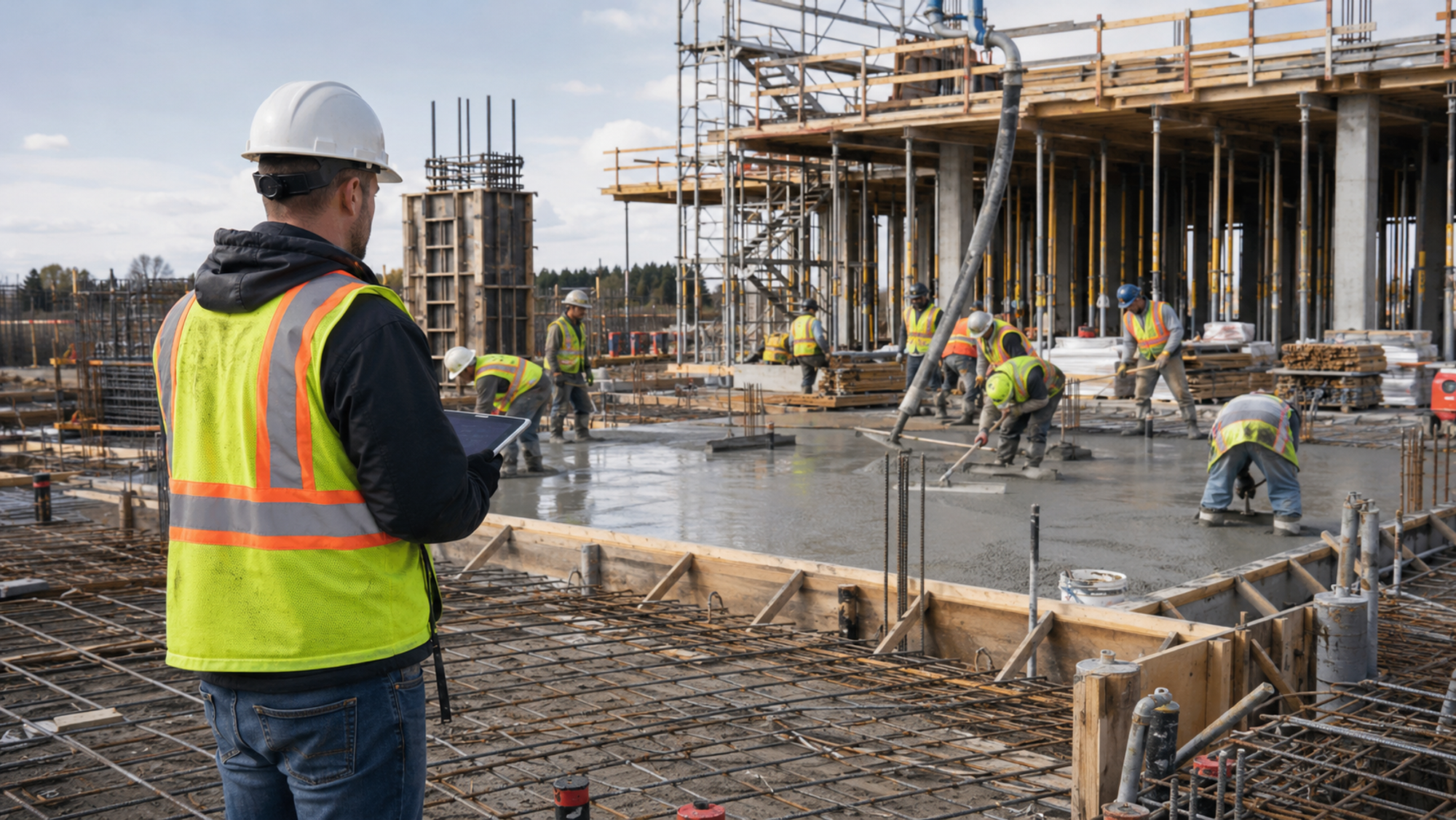
For decades, the general contractor model was built on a simple principle: manage the project, coordinate the trades, and subcontract the actual work. The GC's value was in orchestration holding the programme together, managing risk, and delivering the outcome. The hands-on production went somewhere else.
That model is changing. A growing number of general contractors across North America are building self-perform divisions in-house teams that do work previously subcontracted out. Self-perform concrete. Self-perform framing. Self-perform interiors and fit-out. Some are going further still, opening fabrication shops and kitting warehouses to support their self-perform operations.
The shift is not ideological. It is economic. And for GCs who have done it properly, the results speak clearly better margin, better schedule control, and a structural advantage over competitors who still depend entirely on subcontractor availability.
Why GCs Are Building Self-Perform Divisions
The primary driver is subcontractor reliability. In most markets, finding specialist trades with the capacity, quality, and schedule alignment you need has become genuinely difficult. Subcontractor shortages push out timelines, inflate tender prices, and create dependencies that a GC cannot control. Self-perform removes the dependency.
The second driver is margin. When you subcontract work, you are paying for the subcontractor's overhead and profit on top of their direct costs. On high-volume, repeatable work concrete flatwork, framing, interior fit-out bringing that work in-house and capturing the margin directly is a significant financial improvement over the project lifecycle.
Schedule control is the third driver. When your own workforce is doing the work, you make the decisions about sequencing, acceleration, and resource allocation without negotiating with an external company whose priorities may not align with yours. For GCs with repeat clients and repeat building types, this control compounds each project builds on the last.
The final driver, and the most strategically important, is competitive differentiation. A GC with a proven, reliable self-perform capability on the right scopes can offer clients something most competitors cannot genuine certainty on the work that most frequently causes delays and disputes.
What Self-Perform Actually Means Operationally
Most GCs who have attempted self-perform and struggled did so because they underestimated how fundamentally different it is from managing subcontractors. Self-perform is not just hiring workers directly. It changes the nature of your business.
When you self-perform, you become a production business. You are responsible for materials, not just for coordinating their delivery. You manage work orders, not just scopes. You track labour productivity at the task level, not just at the cost code level. You manage inventory, tool fleets, consumables, and logistics that were previously invisible to you because a subcontractor handled them.
None of this is impossible. But it requires operational systems that most GC project management platforms are not designed to provide. A scheduling tool tells you when something needs to happen. It does not help you manage the materials, work orders, and production workflow that make it happen on time.
The Three Self-Perform Models GCs Are Using
Labour-only self-perform is the simplest entry point. You supply the workforce, but materials and equipment flow through your existing supply chain. This works well for scopes where labour is the main variable framing, interior work, concrete finishing and where material management is relatively straightforward.
Full self-perform covers labour, materials, logistics, and often prefabrication. The GC receives materials, manages inventory, produces assemblies or prepared components, and deploys them to site in sequence. This model captures the most margin but requires the most operational infrastructure.
Hybrid self-perform is the most common approach for GCs starting out. You self-perform on one or two core scopes where you have workforce capability and repeat volume typically concrete or framing while continuing to subcontract specialist work. This limits the operational complexity of the transition while building the internal capability that can expand over time.
What Makes Self-Perform Divisions Succeed or Fail
The GCs who have built successful self-perform divisions share a common operational characteristic: they treat the self-perform division as a business within a business, not as an extension of the project management model.
That means clear scope definitions for every work order. Every task that enters production has a work order that defines what needs to happen, what materials are required, how long it should take, and what the cost allowance is. Nothing goes to the field without one. This discipline is the difference between a self-perform division that is genuinely more cost-efficient than a subcontractor and one that is just as expensive but harder to manage.
It means tracking labour at the task level, not just at the project level. If you know your crew produces X square metres of concrete flatwork per labour-hour, you can plan, price, and manage performance. If you track labour only at the project level, you cannot see where productivity is strong and where it is not until it is too late.
And it means managing inventory and materials as a supply chain function, not as a site logistics problem. When materials are ordered, received, tracked, and allocated to specific work orders, shortages surface before they cause delays. When materials are managed informally, you discover the shortage when the crew is waiting.
When Self-Perform Becomes a Competitive Moat
The GCs who have invested in proper operational infrastructure for their self-perform divisions describe a tipping point usually around the third or fourth project where the division stops being a management challenge and starts being a genuine advantage.
By that point, your crew knows the work. Your suppliers know your requirements. Your operational system has been refined through real projects. Your cost data is accurate enough to price self-perform work competitively while knowing exactly what margin you are building in. And your clients start to see it in schedule reliability, cost predictability, and quality consistency that subcontractor-dependent competitors cannot match.
Merlin EOS is built for GCs at this transition. It runs the production operations of self-perform divisions work orders, inventory, labour tracking, materials management, and cost reconciliation in a single system designed for production operations rather than adapted from a project management tool. If you are a GC considering a self-perform division, or already running one on spreadsheets and noticing the cracks, the operational foundation you build now determines what the division becomes.
Many GCs building self-perform divisions find that prefabrication and self-perform reinforce each other naturally. Mechanical contractors have pioneered the prefab shop model producing rack assemblies and systems off-site in a controlled production environment and the operational disciplines they have developed translate directly into self-perform production for GCs entering similar territory.
Full self-perform almost always requires a dedicated facility for receiving materials, holding production inventory, and staging deliveries to site in the right sequence. Running a contractor warehouse properly with structured receiving, project allocation, kitting, and delivery scheduling is the logistics infrastructure that makes self-perform production reliable rather than reactive.
Materials management is where most self-perform divisions underperform their potential. Moving from site-based ordering to integrated inventory management where materials are received against work orders, consumption is tracked at the task level, and restocking is driven by actual demand is one of the highest-return operational changes a self-perform division can make.
About Merlin AI
Merlin is the operational intelligence and execution orchestration platform built for the construction industry continuously aligning materials, labour, cost, and decisions in real time across every active project. The platform serves three participants in the construction ecosystem: contractors industrialising through prefab, self-perform, and warehouse operations; developers who need their supply chain to coordinate like a production system; and suppliers looking for a direct route into live construction projects. Merlin EOS runs production operations, Merlin PI coordinates projects, and Merlin Merchant connects suppliers to work. Unlike tools that report on work after the fact, Merlin orchestrates it while it is happening. When Merlin runs production, execution becomes inevitable.
Frequently Asked Questions
Q: Which construction scopes are best suited for self-perform? A: The best starting scopes for self-perform are high-volume, repeatable work types where your crew can build genuine expertise concrete flatwork and formwork, light gauge framing, interior fit-out, and rough carpentry are the most common entry points for GCs. Scopes with complex specialist licensing requirements electrical, mechanical, plumbing are typically the last to be brought in-house, if at all.
Q: How do you track cost accurately on self-perform work? A: Cost tracking on self-perform requires work order-level visibility tracking labour hours, material consumption, and equipment usage against specific tasks rather than at the project level. GCs running self-perform on project management software typically lack this granularity and end up with project-level cost data that tells them the result but not the cause. A production oriented system that links work orders to cost in real time gives you the data to improve performance project by project.
Q: Does self-perform require significantly more management overhead? A: Initially yes the operational complexity of managing production directly is greater than managing a subcontractor relationship. Over time, as your systems, crew, and processes mature, the overhead per unit of production decreases substantially. The GCs who struggle with overhead are usually those who have not built adequate operational systems and are managing the self-perform division manually, which does not scale.
Q: Can smaller GCs realistically do self-perform? A: Yes, with the right scope selection. A GC with 30 to 60 field workers can build a productive self-perform capability on one or two core scopes without enterprise level infrastructure. The key is starting with work types where you already have some workforce capability, defining clear operational processes from the start, and not trying to self-perform everything at once. A focused self-perform capability on the right scopes outperforms a broad, underdeveloped one every time.