Why More Developers Are Bringing Construction Procurement In House
Learn why developers are bringing construction procurement in house to improve visibility, reduce risk, control costs, and scale projects confidently.
 Sneha Kumari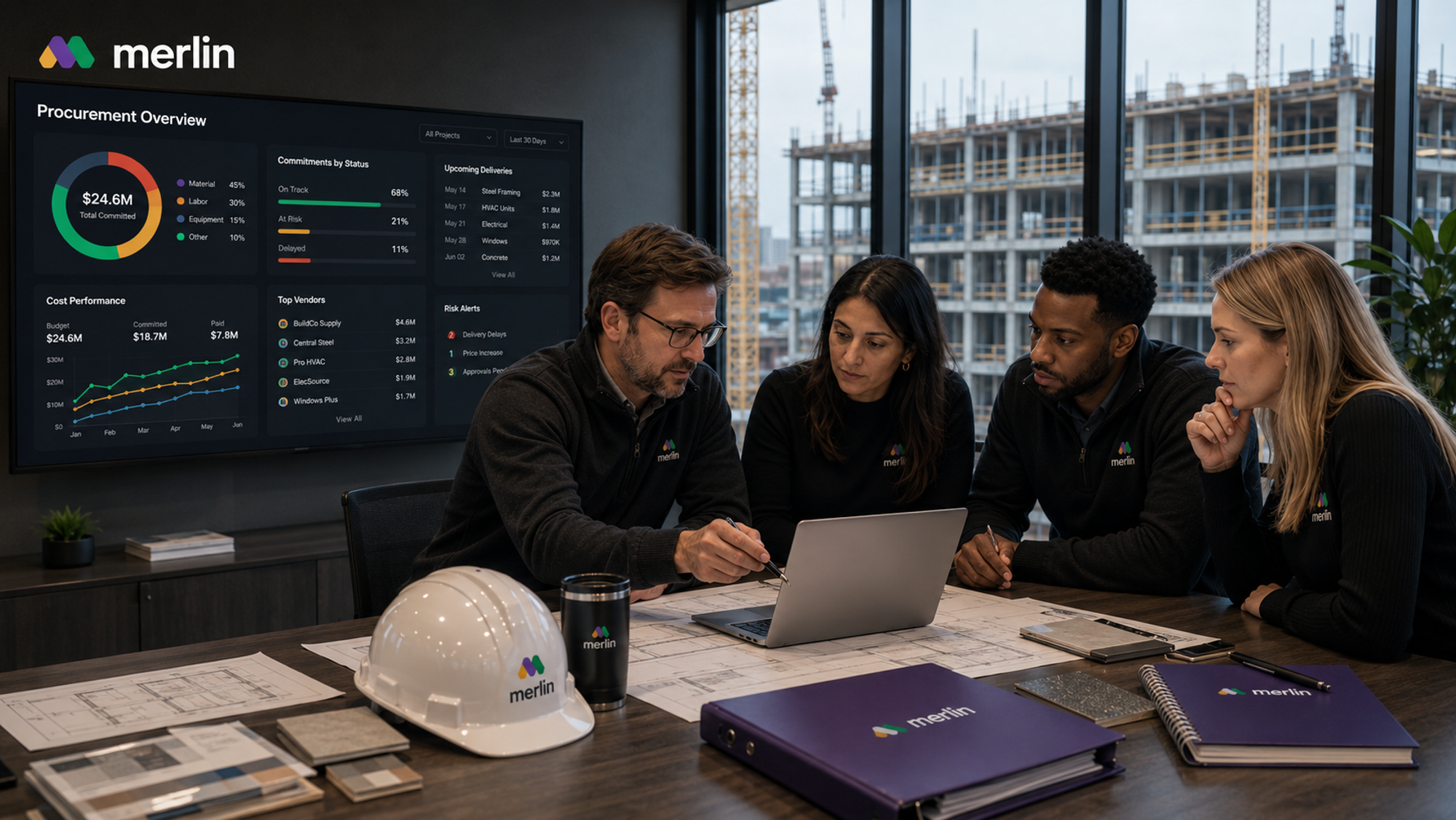
A growing number of development teams are done finding out about problems only after they have already cost money. For a long time, construction procurement sat outside the developer's direct view, handled by a general contractor or a chain of consultants who reported results after the fact rather than as they happened. That is changing. More developers are bringing construction procurement in house, taking direct ownership of vendor relationships, purchase orders, and delivery timelines instead of receiving that information secondhand.
This is not simply a preference for control. It is a response to real exposure: capital committed to buildings that cannot move forward without materials arriving on time, and margins that cannot absorb repeated surprises. This guide looks at why in house construction procurement is becoming the norm rather than the exception, what developers managing project delivery risk look for in a platform, the specific capabilities that define software built for owner led construction procurement, and how standardized systems let developers scale from a single project to a full portfolio without scaling their risk along with it.
The Shift Toward In House Construction Procurement
For years, procurement on development projects has been treated as somebody else's job. Developers set the vision, hired a general contractor, and let that GC negotiate with trades and suppliers on their behalf. It worked well enough when projects were smaller, timelines were forgiving, and material costs moved slowly.
That arrangement is breaking down. Development portfolios have grown more complex, capital costs have risen, and a single missed delivery window can push back an entire project's return timeline. In response, more developers are pulling construction procurement inside their own organizations instead of leaving it entirely to a GC or a patchwork of consultants. In house construction procurement gives developers direct visibility into what is being bought, from whom, at what price, and on what schedule, rather than learning about a problem only after it has already cost weeks.
This mirrors a broader pattern across construction. General contractors are going through a similar shift, bringing self perform work in house through prefabrication and dedicated production divisions so they can control quality, cost, and schedule instead of depending on a long chain of subcontractors. Developers taking control of construction procurement is the owner side version of the same instinct: fewer handoffs, fewer blind spots, and more control over an outcome they are ultimately responsible for funding.
Why Construction Procurement Has Become a Developer Priority
Three pressures come up again and again in conversations with development teams that have made the switch.
Fragmented visibility- When procurement lives inside a GC's systems, a developer typically sees a monthly report, not the underlying purchase orders, lead times, or vendor commitments behind it. If a supplier slips, the developer often does not find out until the delay has already reached the schedule.
Design and purchasing operating on separate tracks- Specifications change throughout design development and value engineering, but procurement decisions are frequently made from an earlier version of the drawings. That gap creates change orders, re ordering, and disputes over who approved what and when.
Cost exposure without early signals- Material pricing and availability can move quickly. Without a system built for early warning procurement delays, a developer's first indication of a problem is often a phone call from the field, not a flag in a dashboard weeks earlier, back when there was still time to act.
None of these problems are really about who holds the purchase order. They are about whether the developer has a system that keeps design, procurement, and schedule connected in one place. That question is what pushes many development teams toward evaluating a dedicated platform rather than trying to solve this with spreadsheets and email threads.
Signs a Development Team Is Ready to Bring Procurement In House
Not every developer needs to make this change today, but a few patterns tend to show up right before a team decides it is time.
The first is portfolio growth. A developer moving from one or two projects a year to a steady pipeline of overlapping developments quickly outgrows a process that depended on one GC's internal systems for each individual deal.
The second is repeated surprise. If delivery delays or cost increases keep surfacing later than they should, that is usually a visibility problem, not a vendor problem, and visibility is exactly what in house construction procurement is meant to fix.
The third is financing pressure. Lenders and investors increasingly want documented, auditable purchasing decisions, not a verbal summary passed down from a GC. A developer that cannot easily show why a commitment was made, and against which version of the plans, is carrying reporting risk along with delivery risk.
The fourth is scale itself. Once a developer is running several buildings at once, standardizing how procurement works across every one of them becomes less optional and more of a prerequisite for growing further without growing risk at the same rate.
None of these signs mean a developer has to build procurement in house overnight. They are simply the point at which evaluating a dedicated construction procurement platform starts to make more sense than continuing to patch together the current process.
How Developers Managing Project Delivery Risk Choose the Right Construction Platform
Once a development team decides construction procurement needs to move in house, the next question is what to run it on. Developers evaluating platforms tend to start from risk, not features. Every dollar of a project's capital is exposed to a chain of commitments across dozens of vendors, and a platform's real job is to make that exposure visible before it turns into a delay or a cost overrun.
For a developer, that exposure is rarely abstract. A late material delivery can push back a certificate of occupancy, delay the start of lease income, or trigger penalties tied to a financing draw schedule. The cost of a delay rarely stays contained to the trade that caused it. It moves downstream into every commitment that depended on that step finishing on time.
This is also why developers tend to evaluate platforms differently than contractors do. A contractor is often optimizing for job costing on a single project. A developer is optimizing for exposure across an entire capital stack, which means the platform needs to speak the language of schedule risk and financing milestones, not only line item costs.
A construction risk management platform for developers earns its place by doing a few things well. It should hold every commitment, purchase order, and vendor relationship in one system rather than scattered across a GC's tools, a spreadsheet, and a set of inboxes. It should flag purchase orders that are trending late relative to the schedule they support, not just report status after the fact. Coordination failure, not any single vendor, is usually the real reason projects slip, so a platform that surfaces those failures early is worth more than one that only documents them after the damage is done.
This is also where early warning procurement delays becomes a concrete feature rather than a phrase. Instead of waiting for a trade to show up to a site with no material on hand, a system built around early signals tracks lead times against the schedule continuously and raises a flag the moment a purchase order starts drifting, while there is still time to expedite, substitute, or resequence the work around it.
What to Look for in a Platform Built for Owner Led Construction Procurement
Developers taking direct control of construction purchasing need a platform built around their position in the project, not a tool adapted from contractor software or a generic enterprise system. A few capabilities separate a platform genuinely built for owner led construction procurement from one that simply adds a developer login to a contractor product.
Design to procurement construction software should be the starting point. Specification and scope decisions made during design should flow directly into procurement records, so a change made in a design review updates the purchasing plan automatically instead of requiring someone to manually reconcile two separate systems. This closes the gap between what was designed and what actually gets bought, and it removes one of the most common sources of disputes on a project: a purchase made against drawings that were already out of date.
Standardized vendor data matters just as much as workflow. When every project records vendor performance, pricing, and lead times the same way, a developer can compare suppliers across projects and negotiate from real history instead of memory.
A clear audit trail protects the developer's position with lenders, investors, and delivery partners. Every commitment should show who approved it, when, and against which version of the plans.
Trade and supplier coordination visibility keeps procurement from operating in isolation. A platform that shows how a purchasing decision affects sequencing and labor availability prevents a common failure mode, where procurement and scheduling are technically both tracked but never actually talk to each other.
Finally, the platform should fit into the rest of a developer's stack rather than becoming another island of data. Purchasing records should be able to flow into the accounting and reporting systems the finance team already relies on, and approvals should work from a phone in the field as easily as from a desk, so a purchase order is never simply stuck waiting on someone to get back to an office.
How Standardized Software Helps Developers Scale Multi Building Projects
The case for in house construction procurement gets stronger the moment a developer moves from a single project to a portfolio. Running five, ten, or fifty buildings through five, ten, or fifty different procurement processes multiplies risk instead of managing it. Every new project team ends up reinventing vendor vetting, purchase order templates, and approval chains from scratch, and every inconsistency becomes a place where something can fall through.
Standardized software lets a developer template a procurement process once and apply it consistently across every building in the portfolio. The same purchase order structure, the same approval chain, and the same vendor scorecards travel from project to project instead of living inside one project manager's head. New teams onboard faster because the system carries the process, not an individual's institutional knowledge.
Standardization also makes portfolio level reporting possible. A developer can compare cost per unit, vendor performance, and delivery reliability across every active building at once, instead of assembling that picture by hand from a dozen disconnected project files. For a developer scaling toward repeatable, programmatic delivery, that consistency is not a convenience. It is what makes scale possible without a proportional increase in risk.
This is where design to procurement construction software pays off again at a portfolio level. A developer running a repeatable building type, a garden style multifamily plan or a standard single family layout, can compare actual purchasing outcomes against the original estimate on every building, then feed what it learns back into the next one instead of starting each new project's budget from a blank page.
Bringing Procurement In House Without Losing Coordination
Bringing construction procurement in house is not about developers taking on more paperwork themselves. It is about developers holding the connective layer between design, purchasing, and schedule that used to live inside somebody else's systems, where problems were often invisible until they were already expensive.
Merlin PI was built as that connective layer for development teams. It sits between design and the field, keeping procurement, scope, and schedule aligned across every active project, so risk surfaces while there is still time to act on it, rather than after a delay has already reached the site.
Frequently Asked Questions
What does in house construction procurement mean?
In house construction procurement means a developer or project owner manages purchasing directly, rather than leaving it entirely to a general contractor or outside consultant. The developer holds visibility into vendor selection, purchase orders, pricing, and lead times, instead of receiving that information secondhand through a monthly report.
Why are developers moving construction procurement in house instead of outsourcing it?
Developers are bringing procurement in house to close the visibility gap that comes with outsourcing it. When purchasing sits inside a GC's systems, a developer often learns about a delay or cost increase only after it has already affected the schedule. Direct control lets a developer see problems early enough to actually respond to them.
What should a construction risk management platform for developers include?
A construction risk management platform for developers should centralize every purchase order and vendor commitment in one system, track lead times against the project schedule, and flag commitments that are trending late before they become a delay. It should also keep a clear record of who approved each decision and against which version of the plans, and let a developer compare vendor performance across projects, since the platform builds a track record that a single spreadsheet never could.
How does design to procurement construction software reduce delays?
Design to procurement construction software connects specification changes made during design directly to procurement records, so a purchasing plan updates automatically when scope changes, rather than relying on someone to manually reconcile design and buying decisions across two systems. This closes the gap that typically causes re ordering, change orders, and schedule slippage.
Can in house procurement work for smaller developers, not just large portfolios?
Yes. The core benefits, direct visibility into vendor commitments and earlier warning of delays, apply to a single project as much as a large portfolio. Smaller developers often feel the advantage even sooner, since they have less capacity to absorb a surprise delay or cost overrun on any one project. A single project with a tight financing timeline can be just as exposed to a procurement surprise as a fifty building portfolio, which is one reason in house construction procurement is becoming standard practice at a much smaller scale than it used to be.